The Right Fit
Online sizing doesn't just fail at fit. It actively triggers self-judgment. The friction isn't a usability bug. It's a design mismatch.
Size charts flatten the complexity of cut and fabric. "People like you" features ignore fit preference entirely. Model imagery presents one body as the reference for all others. The doubt, shame, and inadequacy triggered by a size label aren't accidental. The design is actively building them.
The Right Fit reframes the question entirely. Rather than asking "What size are you?" it asks "How should this garment fit you?" The body is no longer the object of evaluation. The garment is.
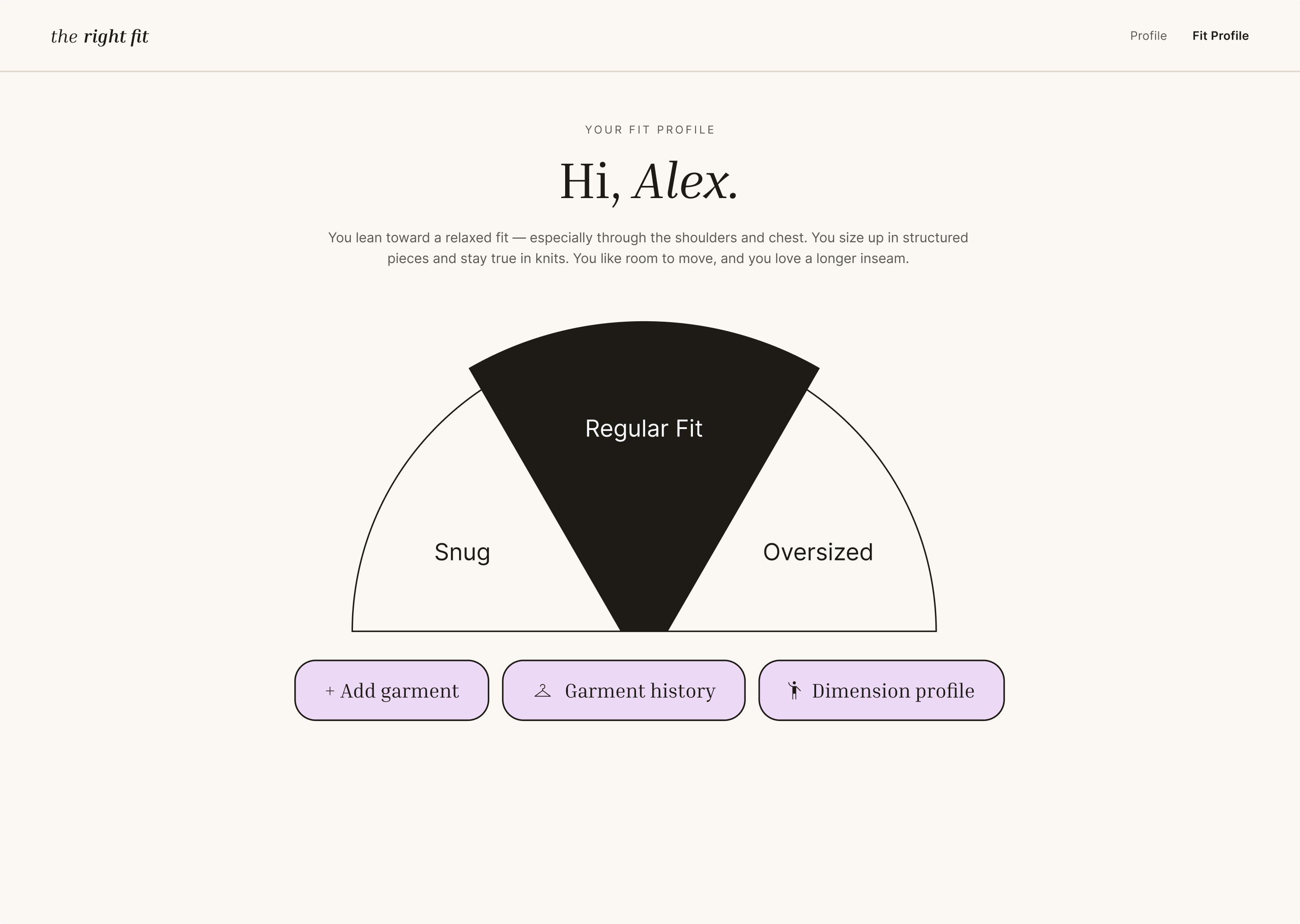
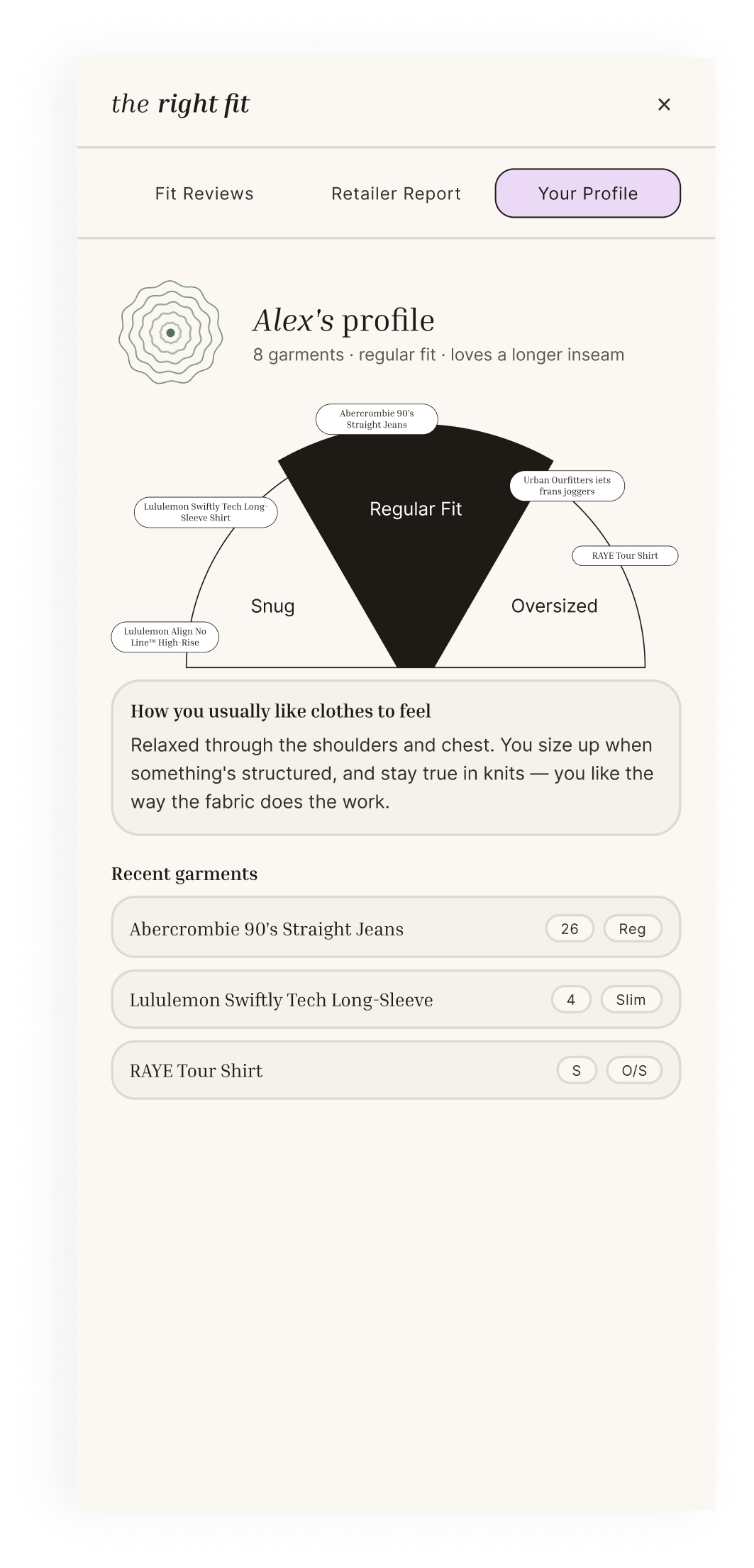
Built around clothes that already feel right, not measurements. You describe what you own, how it sits, and what it feels like, and the system builds your fit profile from there.
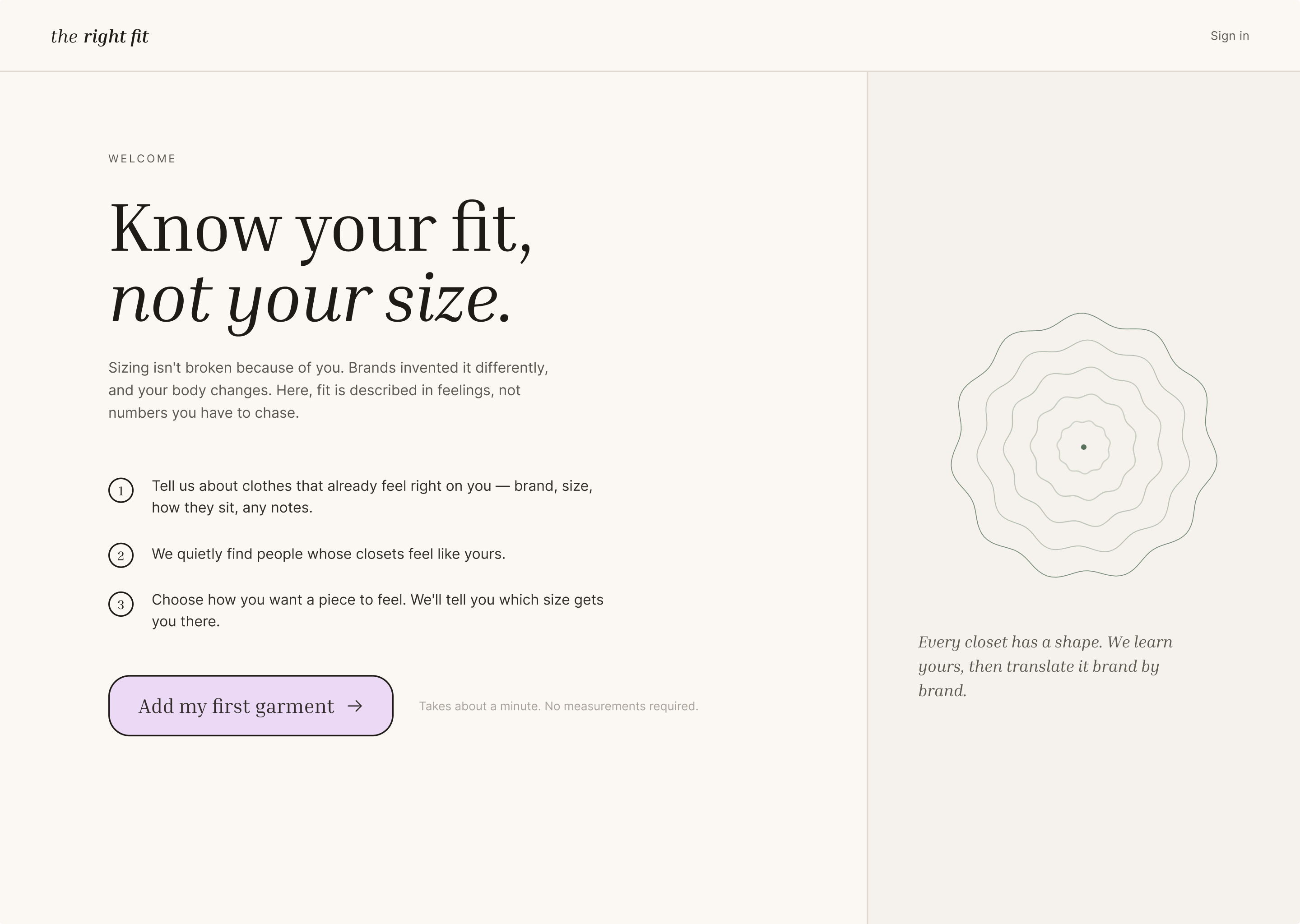
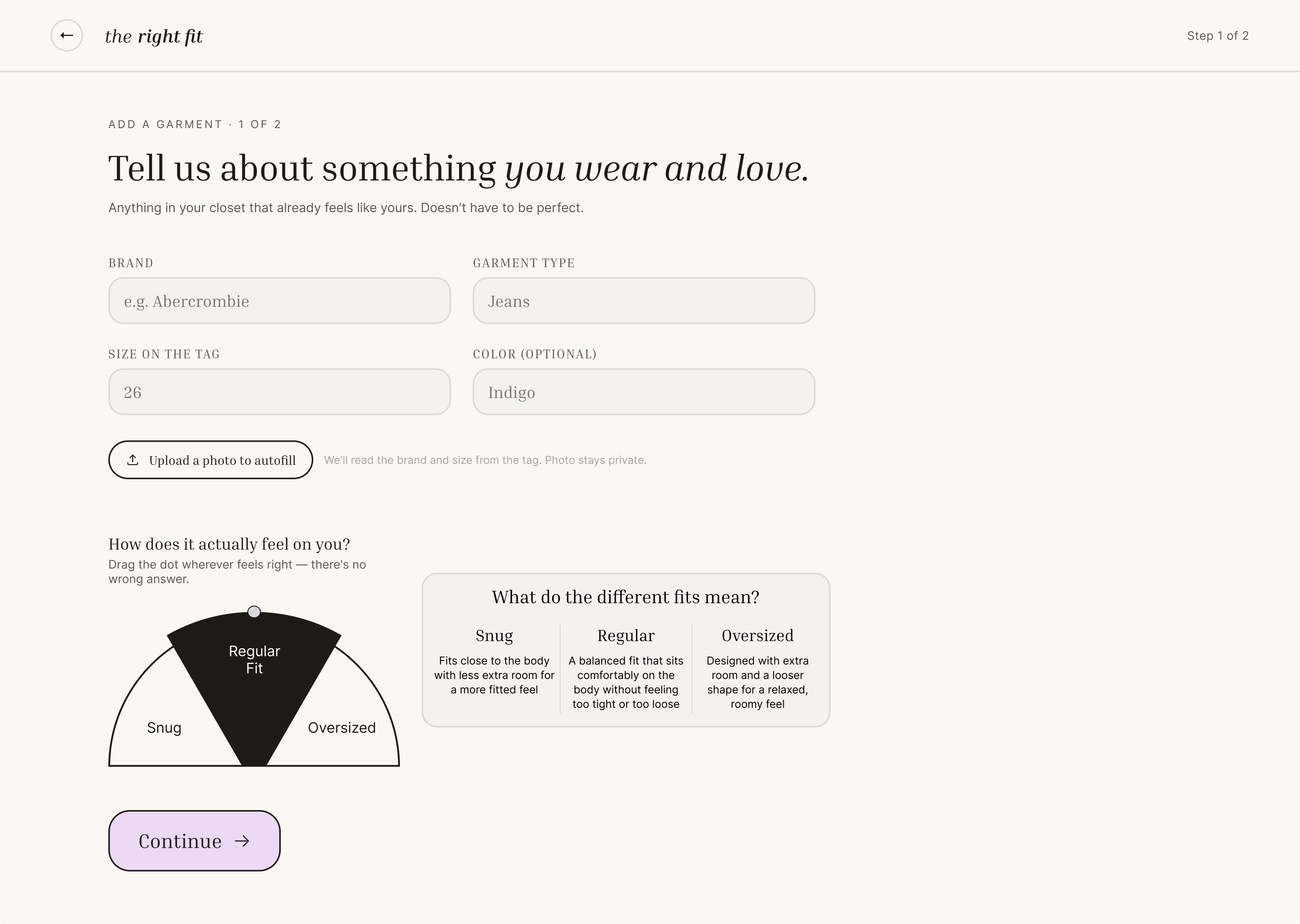
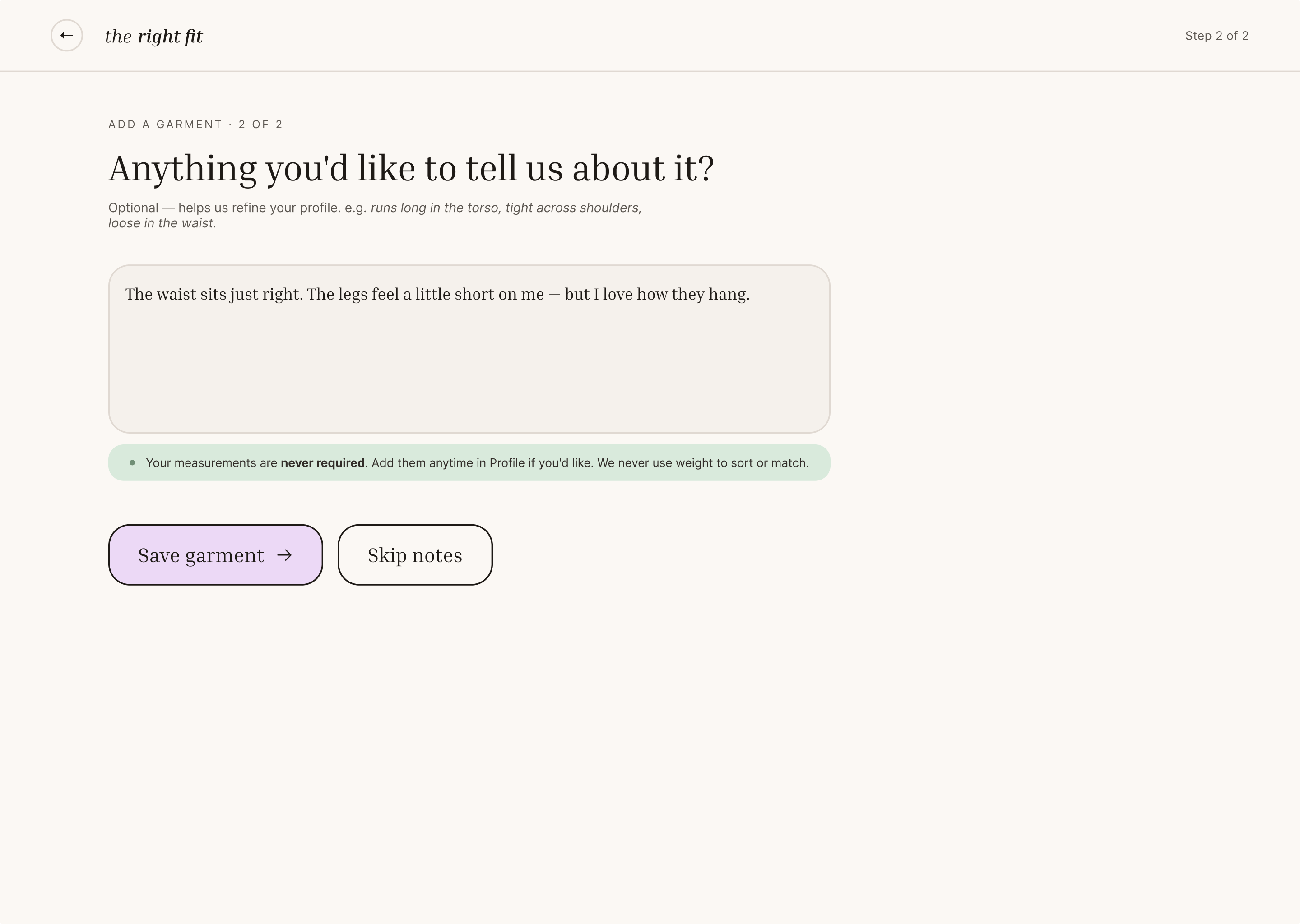
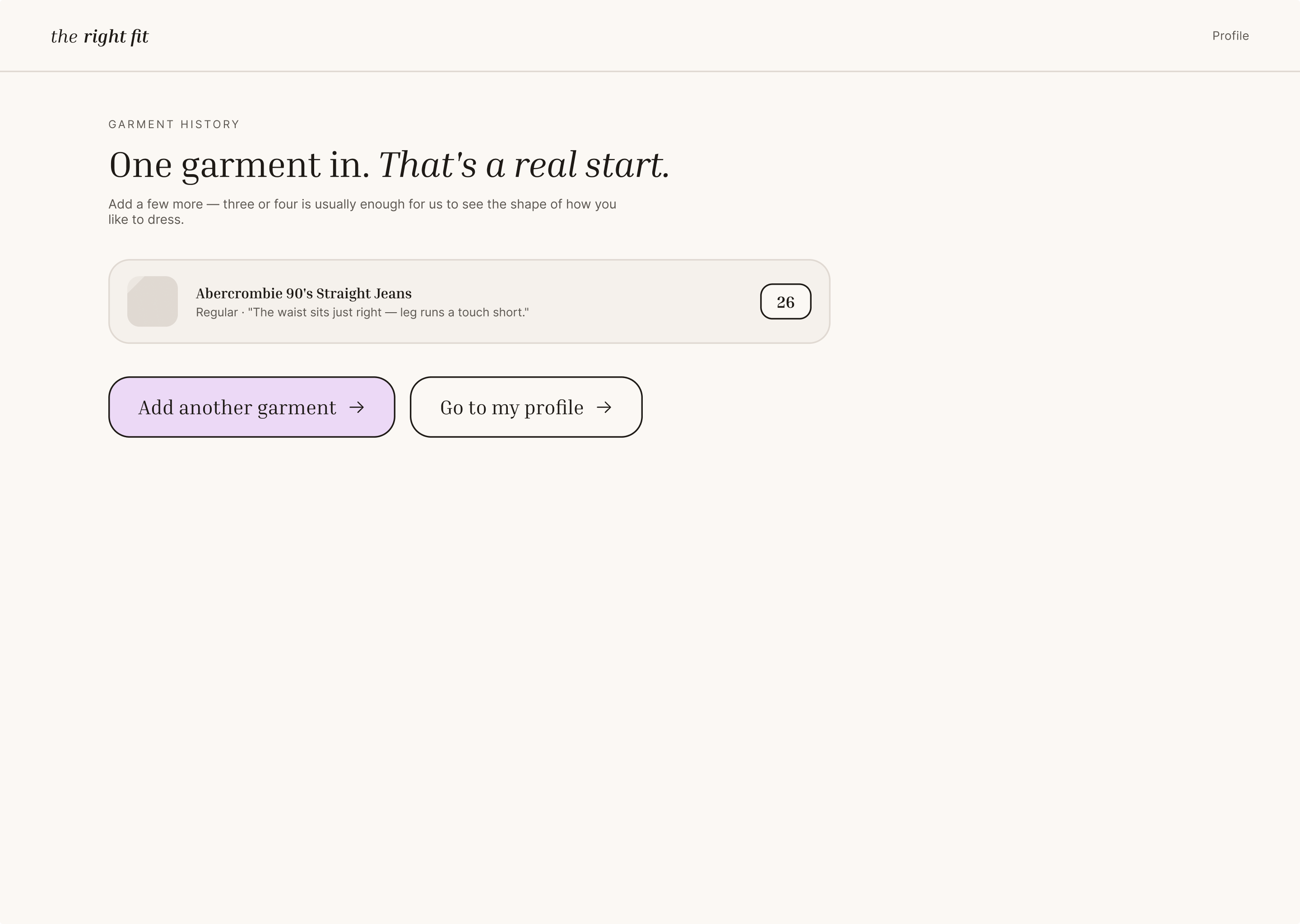
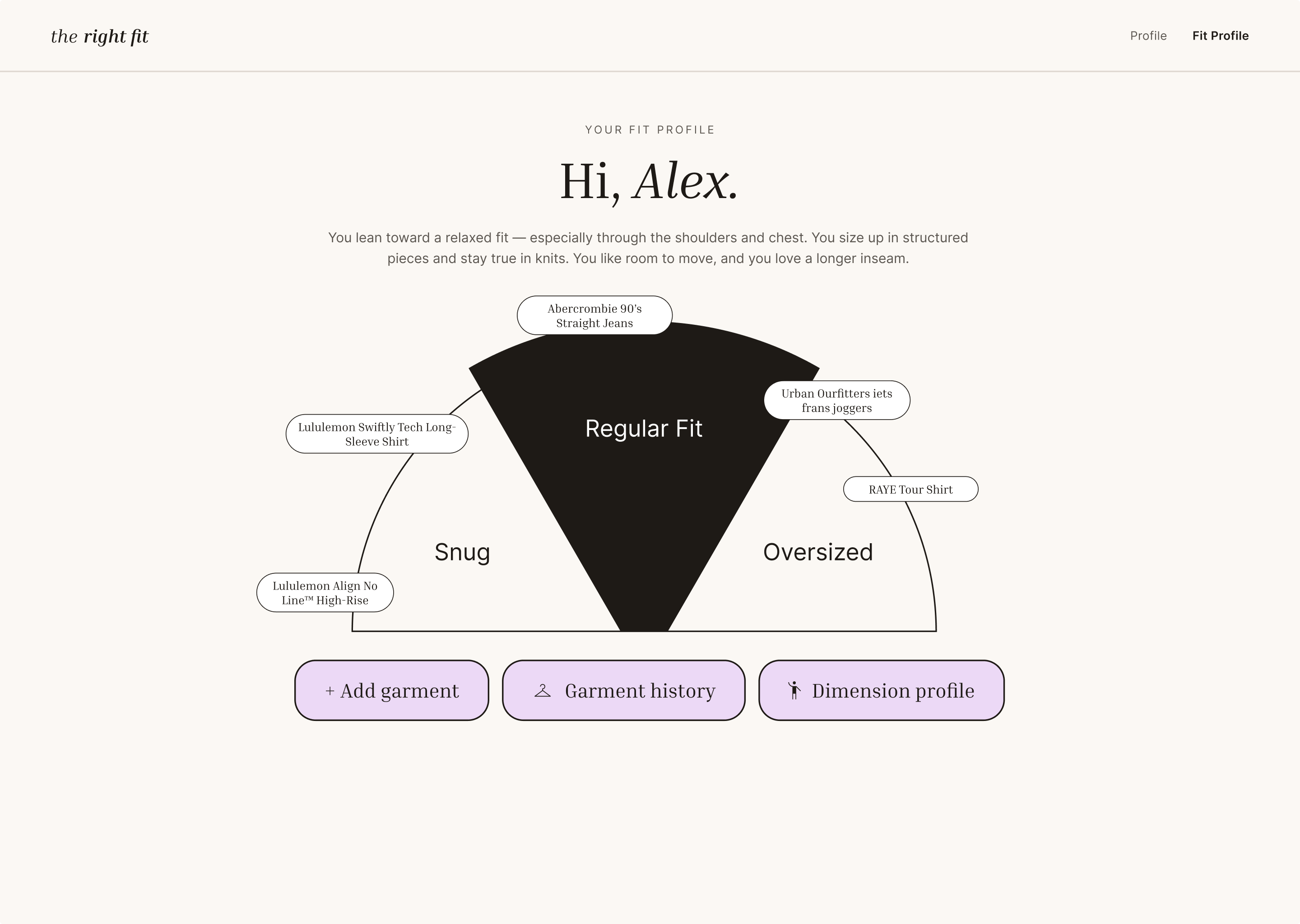
The result of onboarding, and the engine behind every recommendation. Your garment history is editable as your body or preferences change, measuring the item, not you. Measurements are optional, never required.
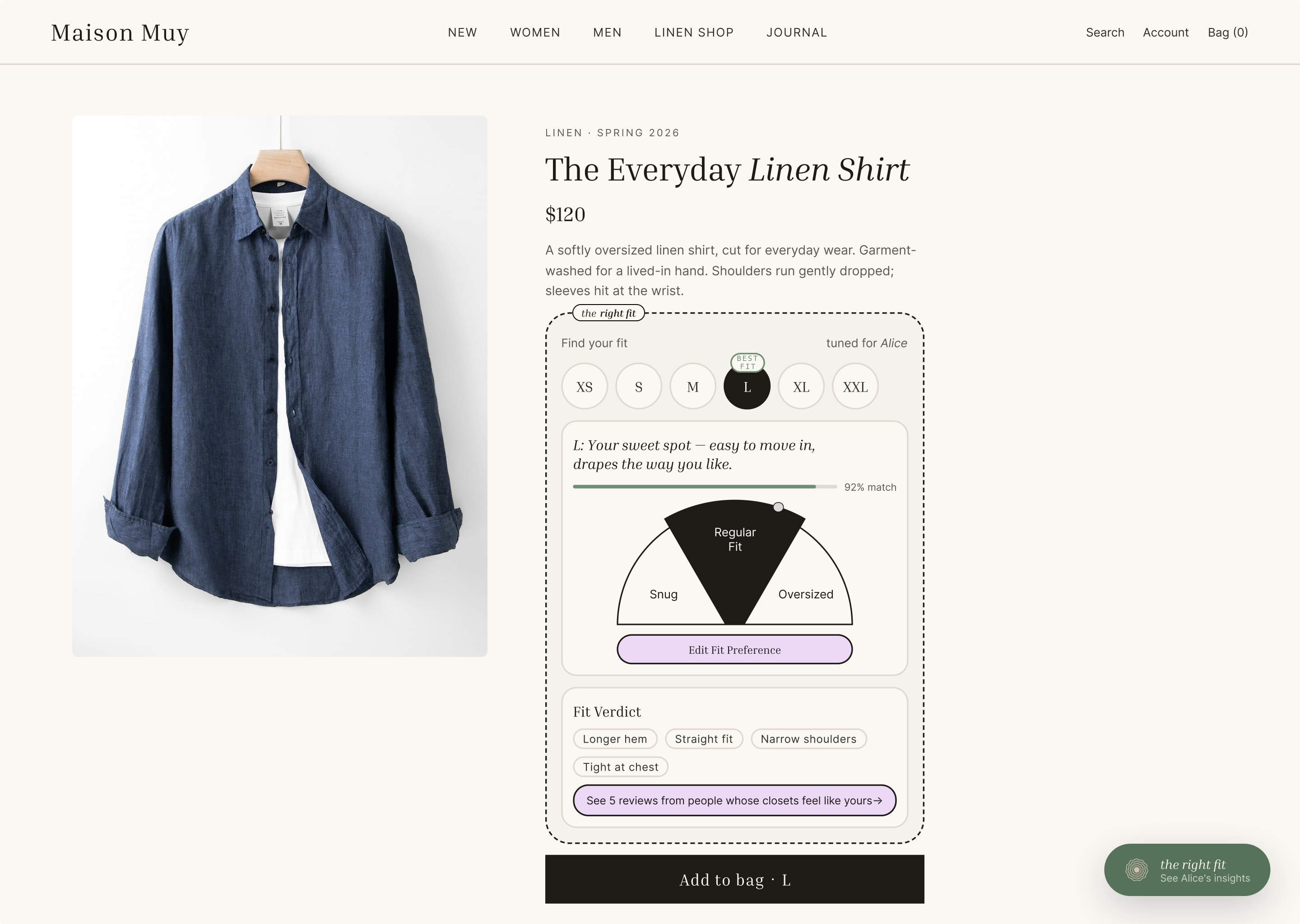
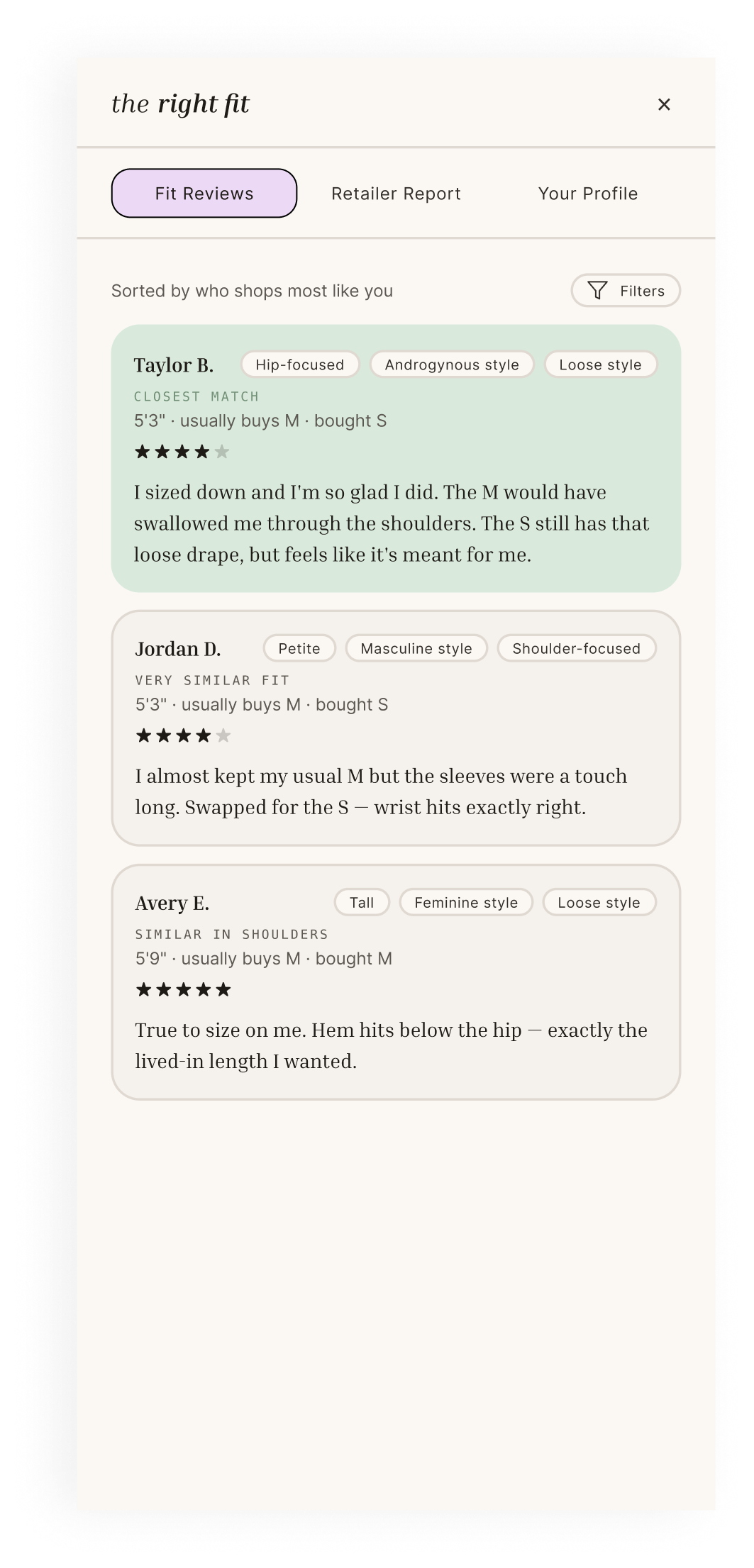
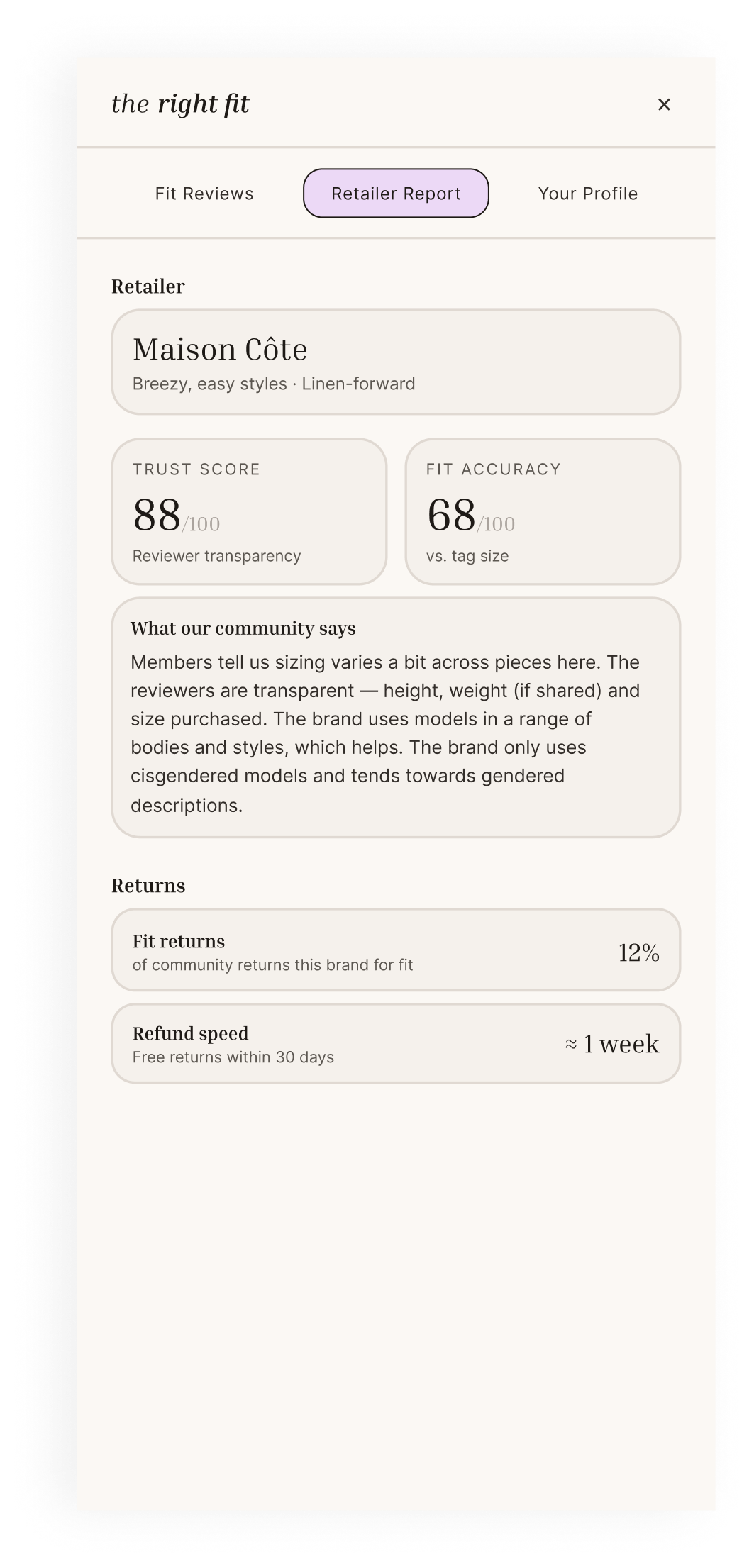
Lives where the problem actually happens, at the point of purchase on retailer sites. Fit reviews surface real feedback from people with similar profiles. The retailer report shows sizing accuracy, return data, and brand transparency. Your profile travels with you.
Six emotional journey mapping sessions tracked emotional valence across a single shopping arc: not task completion, but the affective texture of the experience.
Users didn't trust the system, so they'd built their own. Reddit threads, customer reviews, and flexible return policies had become the real sizing tools.
A second round of cognitive walkthroughs evaluated the prototype, focused on emotional friction rather than functional learnability.
Language, visual tone, placement of information. None of it is neutral. For users who've already been let down, every small decision is either building trust or breaking it.
Standard personas average out the edges. These three were built around the users most harmed by exclusionary sizing systems.
Arrives exhausted, alienated by any language that forces a binary choice.
→ Androgynous style tags, inclusive language, inclusivity signals in reviews
Shops with her guard up, over-researching to compensate for size charts she can't trust.
→ Transparent fit reviews, style-first experience
Needs a system that meets her where she is now, not anchored to a previous version of herself.
→ Editable garment history
- Emotional journey mapping protocol and findings across 6 participant sessions
- Personalized fit profile system: no measurements, no weight, preference-based
- Browser extension prototype with community reviews, retailer transparency, and return policy visibility
- Two full design iterations refined through emotional journey mapping, cognitive walkthrough, and inclusive personas