Lent With Love
.png?v=3)
The prompt was open-ended, so I got to choose my own problem. I was fairly sure I'd found it.
I assumed lending books was hard for logistical reasons, like tracking who had what and remembering to ask for it back. I almost built Venmo for books.
I live in New York, where books take up space I don't have. Mine sat unread on a shelf when friends would happily have taken them. That was the problem I brought into Coding It Forward's Hack Your Summer, a four-week production sprint.
My starting question was how to make lending easier. I figured people wanted inventory tracking and reminders, and that the physical handoff was the painful part. Research was supposed to confirm it.
I was wrong.
I widened the question beyond lending to how people discover books, decide what to read next, and decide whose taste they trust. That's where the real finding was.
I was designing the wrong product.
Almost no one described the handoff as a real frustration. What people kept bringing up, unprompted and in their own words, was wanting to know what the people they trusted were reading.
So I stopped designing a lending platform and started designing a social one. Lending became a feature, and the community became the product. Without the research, I would have spent four weeks building the wrong thing.
A lot of products bolt AI onto every interaction. I wanted to use it only where it actually removed friction, and that wasn't recommendations or discovery. Those are the parts people are good at.
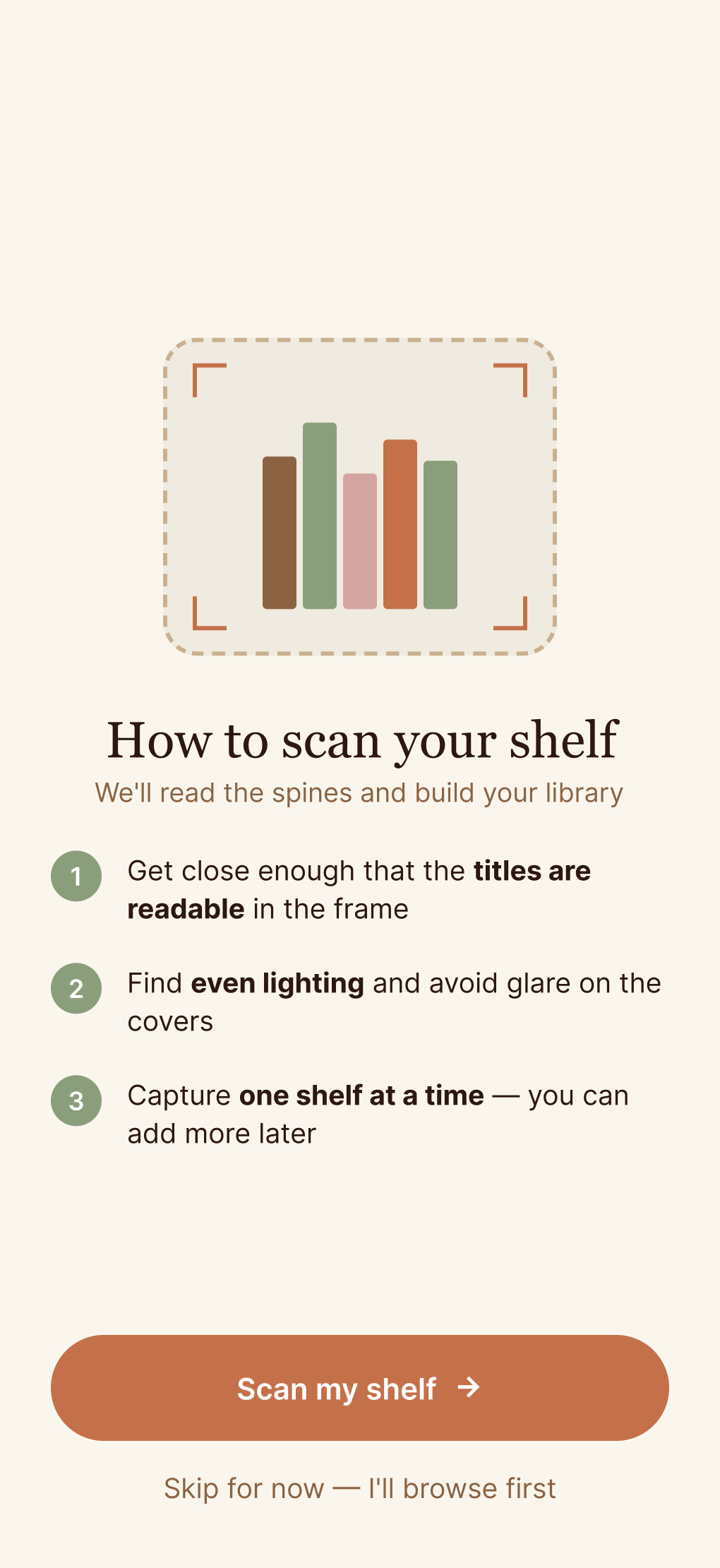
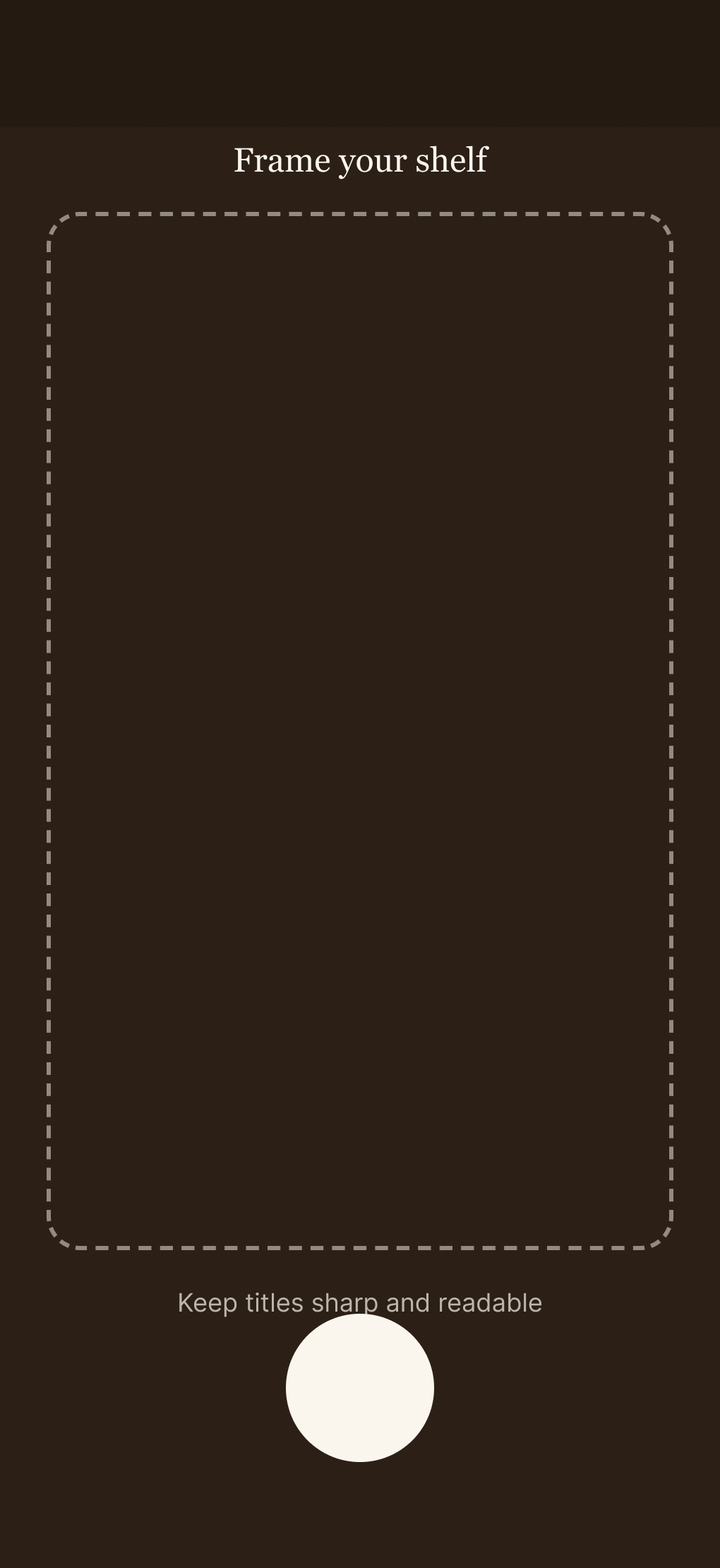
It was onboarding. Typing in hundreds of titles by hand is a lot of work before the app is useful at all. Instead, you photograph your shelf and the AI identifies the titles, authors, and editions. After that it gets out of the way, and your friends become the recommendation engine.
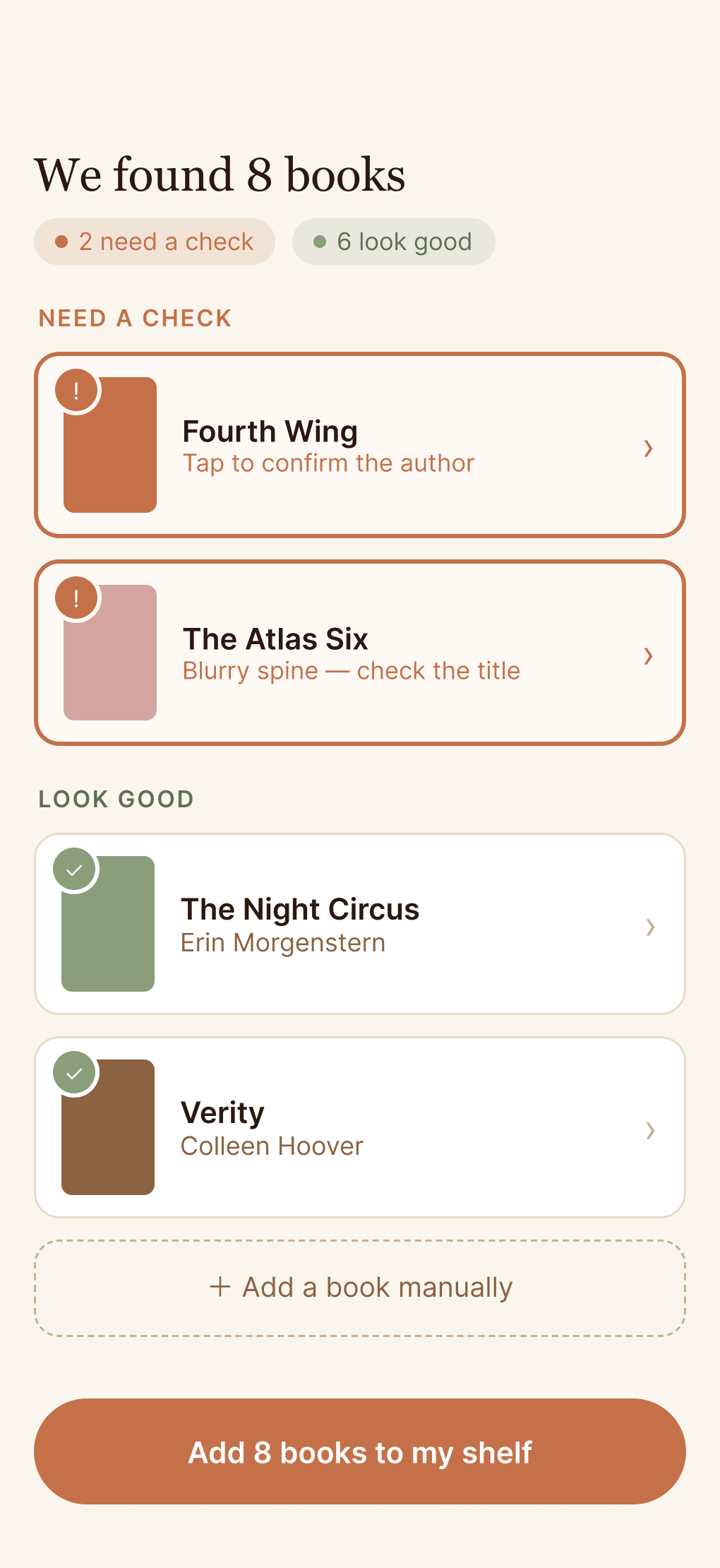
The confirm screen is where trust is won or lost. Results are grouped by confidence, and anything the scan got wrong is easy to fix. A scan that's mostly right should feel like a head start, not a mess to clean up.
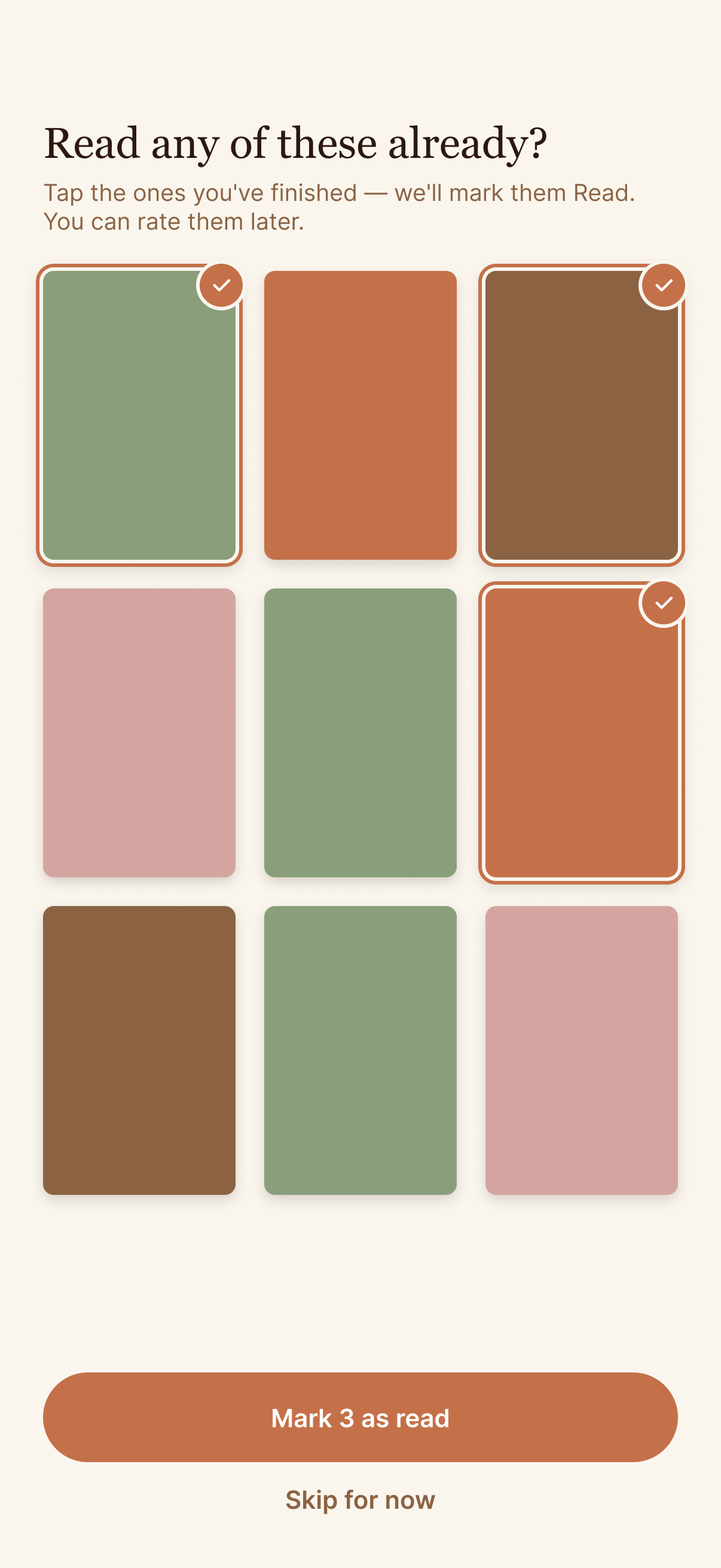
Curation comes last on purpose. Once the shelf exists, marking what you've already read takes one pass, rather than fixing your library one book at a time later.
There's no gamification, no algorithmic feed, and no strangers. It's a warm place to see what people you trust are reading, and to share what you love back.
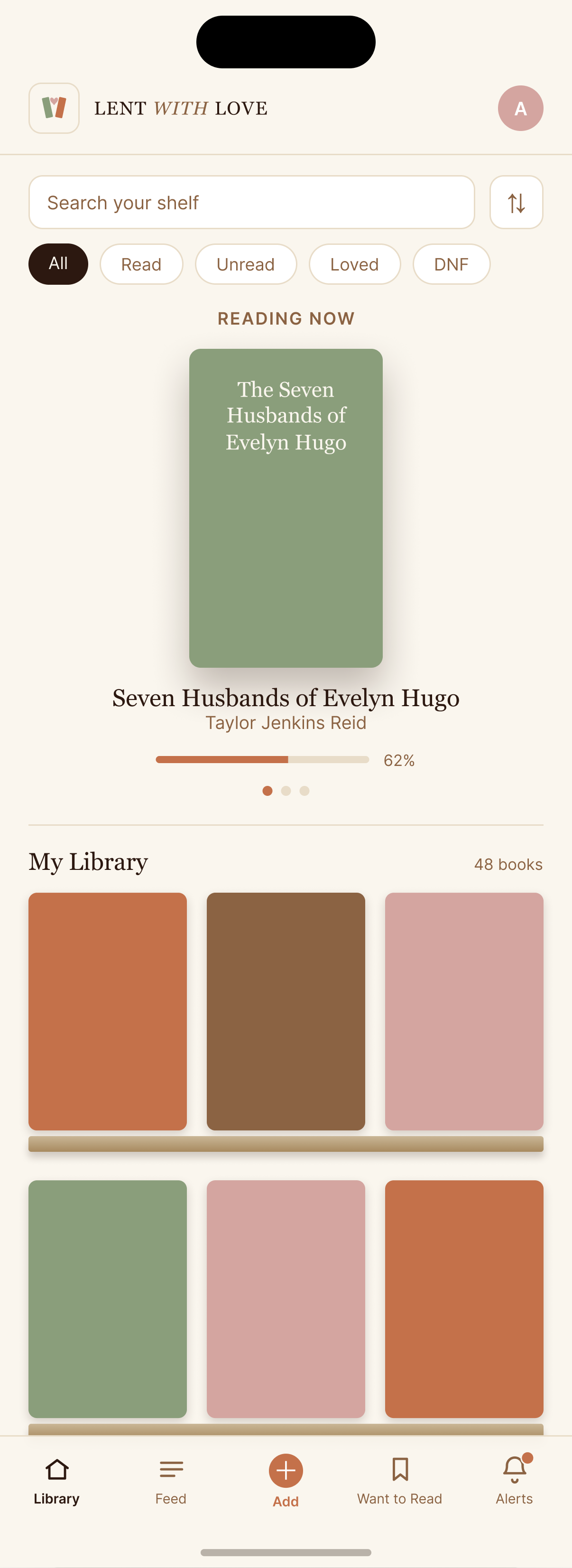
Covers face forward on wooden shelves so the library feels like a room, not a spreadsheet. A Reading Now card shows what you're in the middle of, and chips filter by read, loved, or DNF.
Bare.png)
Bare.png)
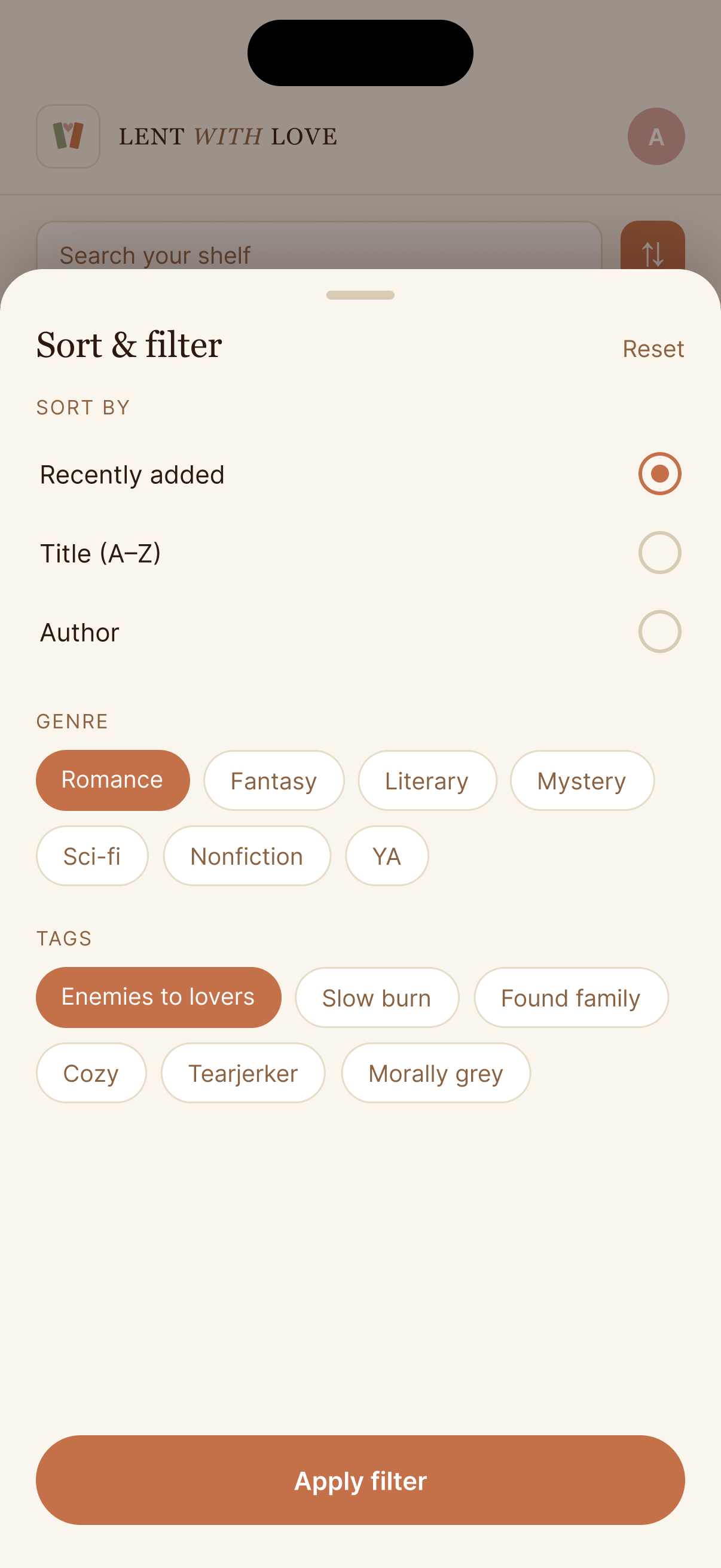
The first action on every book is “Recommend to a friend”, ahead of rating or sharing, because that's the behavior the whole product exists for. On a friend's book you see their rating, their review, and the quotes they saved.
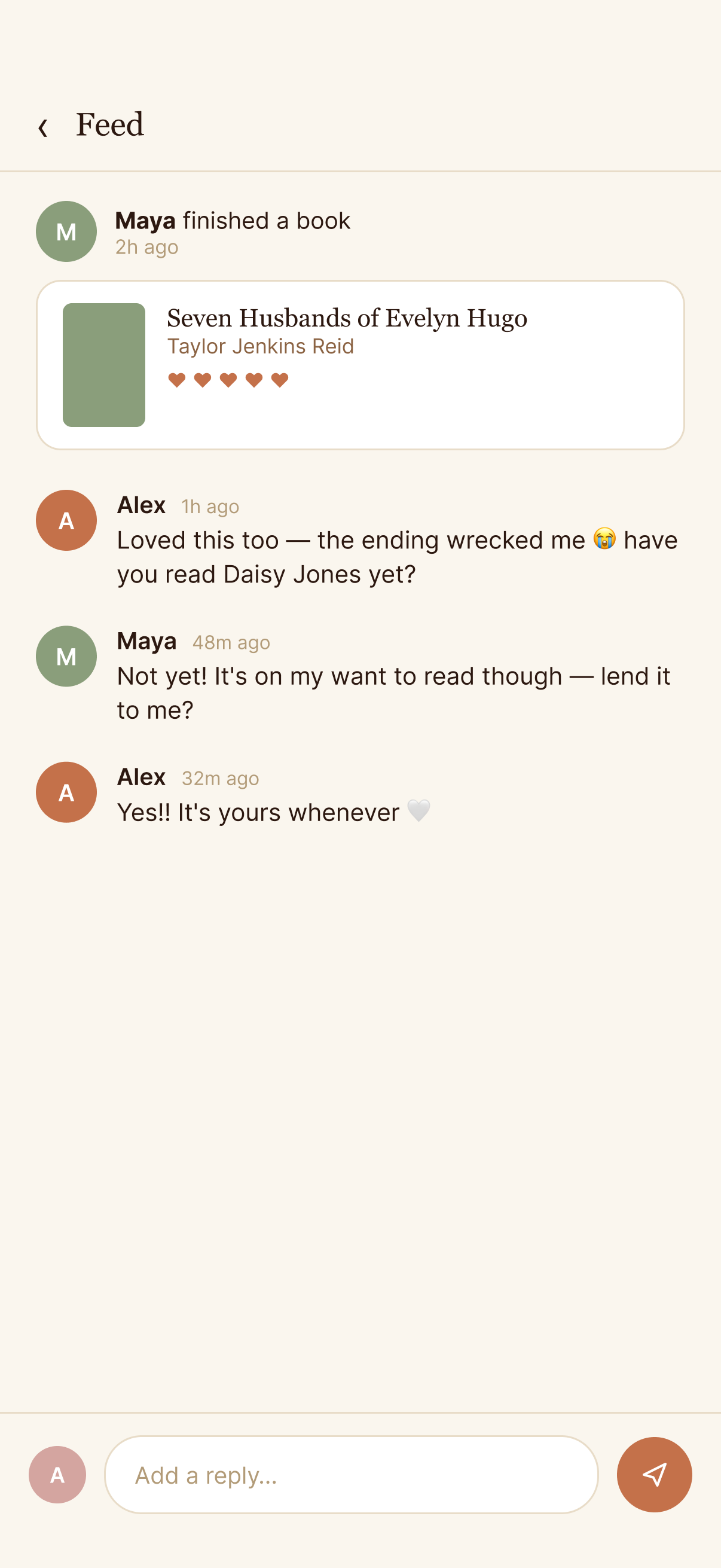
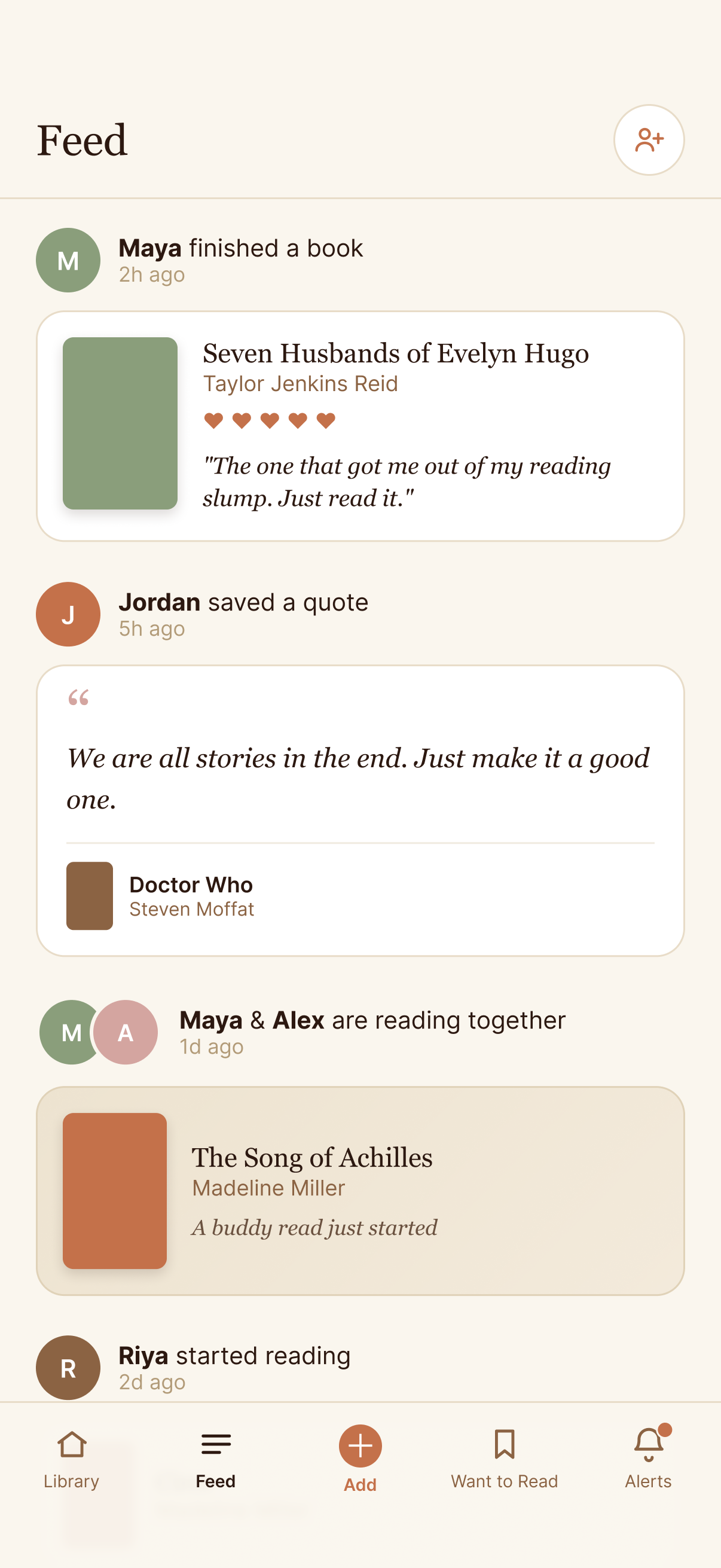
The feed is chronological and friends-only, and there's no composer. Posts come from things you actually did, like finishing a book, saving a quote, or starting a buddy read. There are no like counts.
Lent With Love was one of five projects chosen for the final showcase, out of a program of 2,600 participants. The research pivot was the part of the story that landed.
- Research plan covering objectives, participant criteria, and mixed-methods approach
- 5 semi-structured interviews and a 40-response survey, synthesized into the pivot
- A full product pivot, from lending logistics to a social reading network
- 26 canonical screens across onboarding, library, discovery, social, and lending flows
- AI shelf scan pipeline: photo → spine recognition → confidence-graded confirm screen
- Showcase presentation, selected from 200+ projects in Coding It Forward's Hack Your Summer
- React Native + Expo build with Firebase Auth, Firestore, and Functions, shipped and in beta
"This is one of the best thought through book-lending apps I've seen. She's exactly the kind of talent I'd want on a team!" — DJ Patil · Head of Hack Your Summer · former U.S. Chief Data Scientist