Gutenberg Technology
Gutenberg Technology was beta-testing a new AI feature for content editing and creation. We ran research to surface what was holding adoption back.
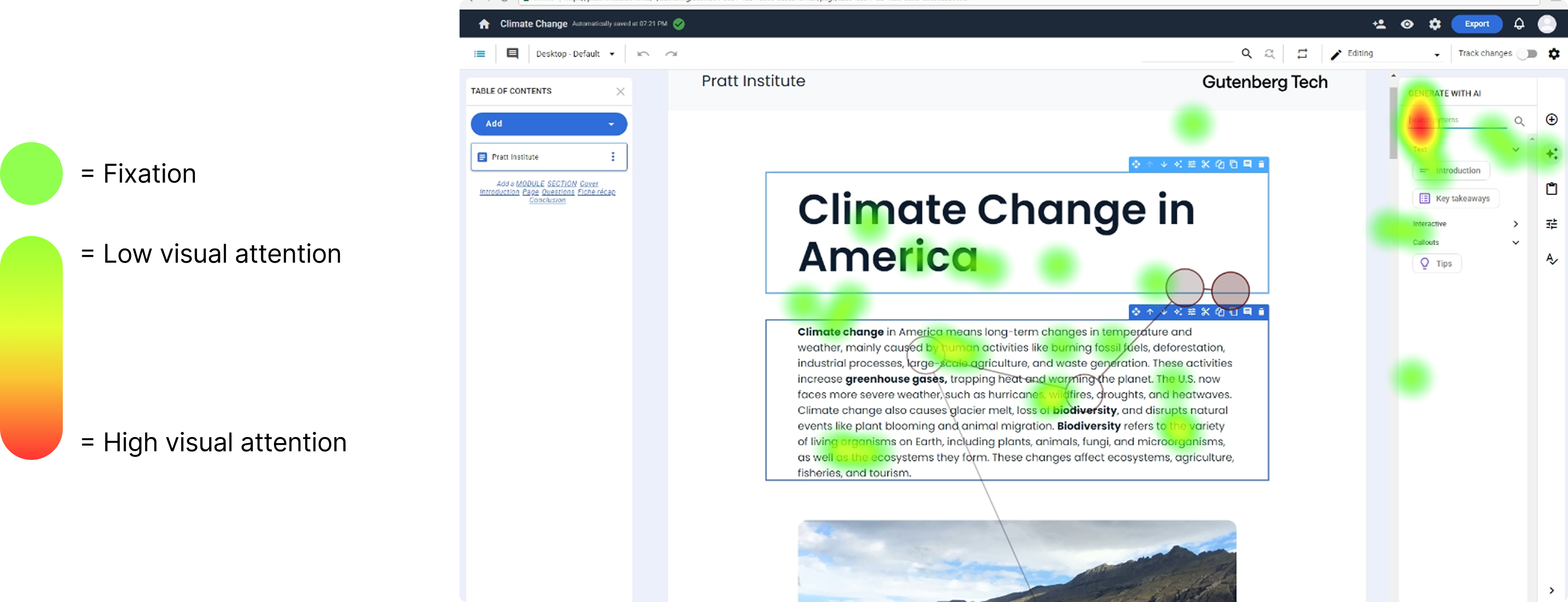
The AI features were hidden in plain sight. Users struggled finding them, and when they did, couldn't tell what the AI had actually changed.
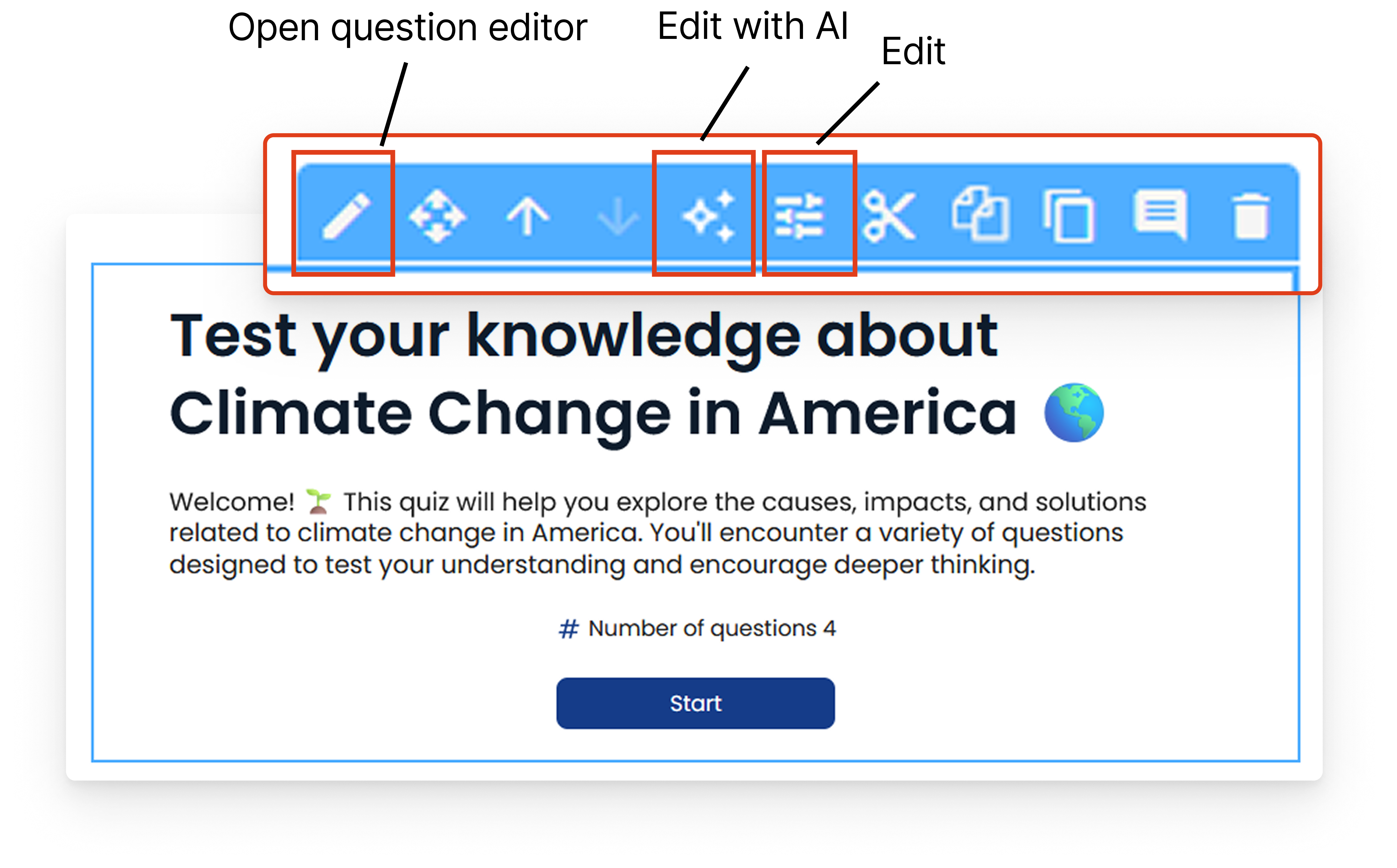
The "Edit with AI" CTA wasn't visible or intuitive enough, so users didn't recognize it as the main entry point.
Consolidate AI actions into a single, clearly labeled entry point that aligns with user expectations.
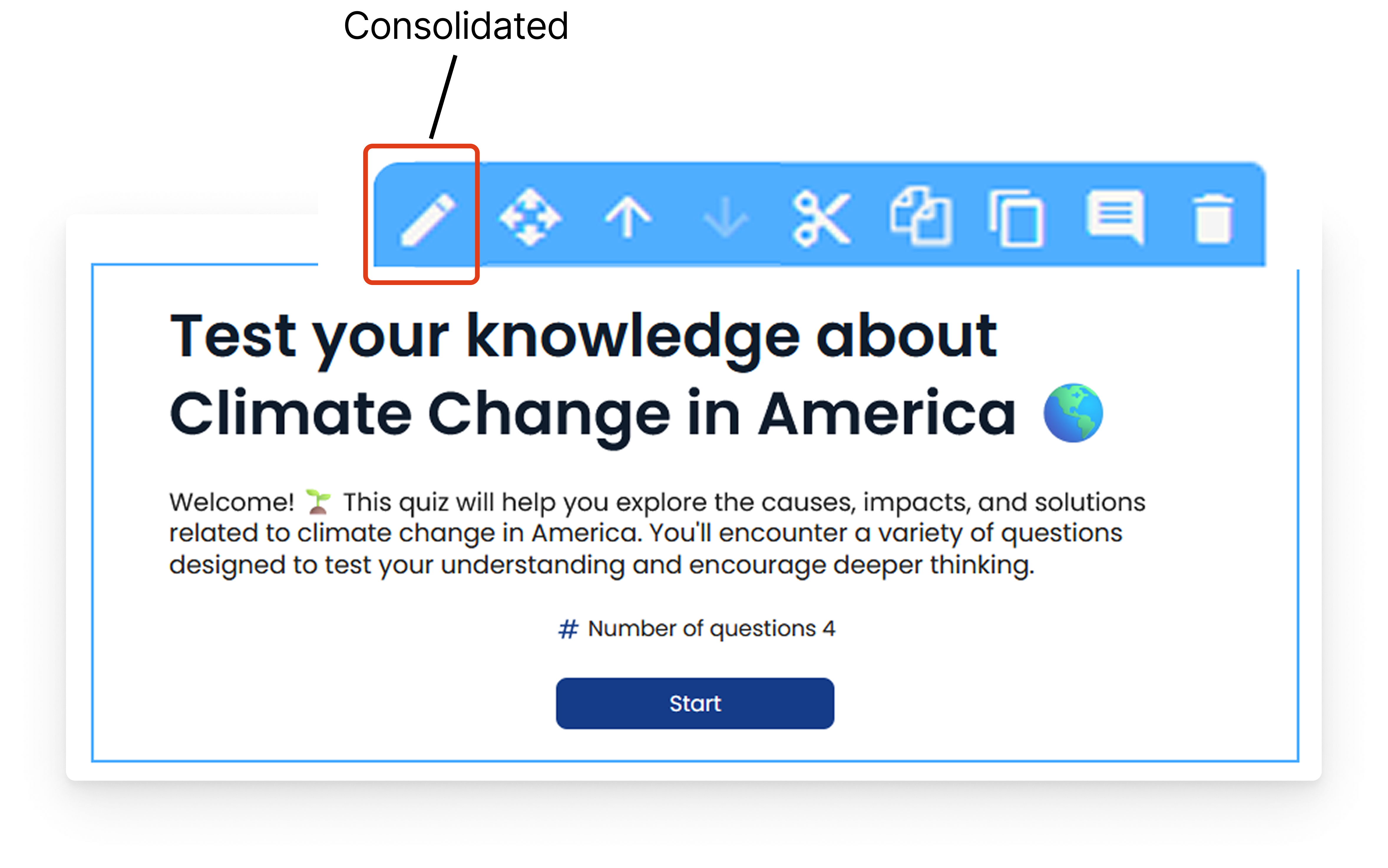
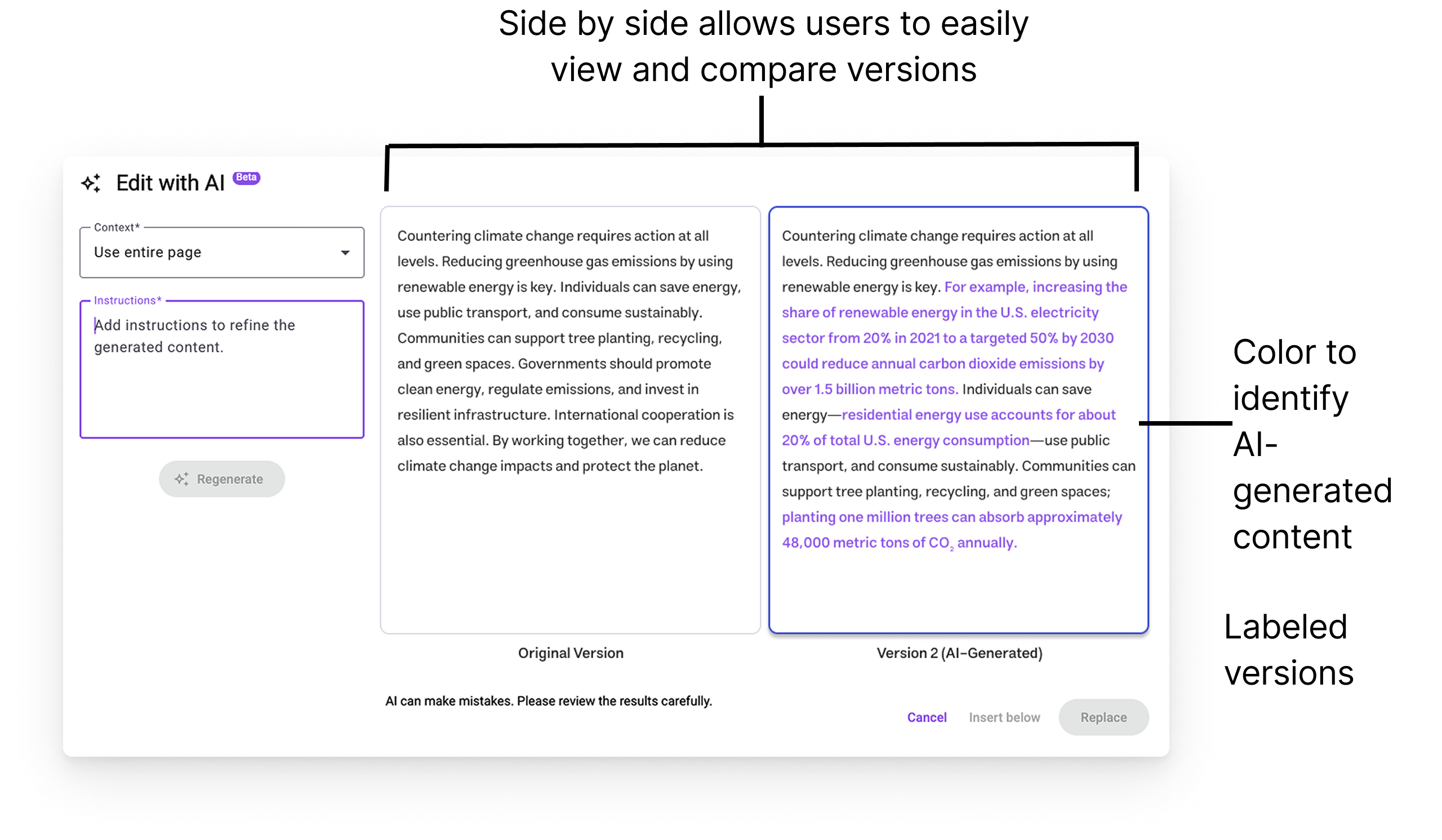
Users couldn't easily distinguish AI-generated changes from the original, toggling back and forth to compare.
A side-by-side view of original and edited text, with color-coded highlights on AI changes making the difference visible without requiring users to toggle back and forth.
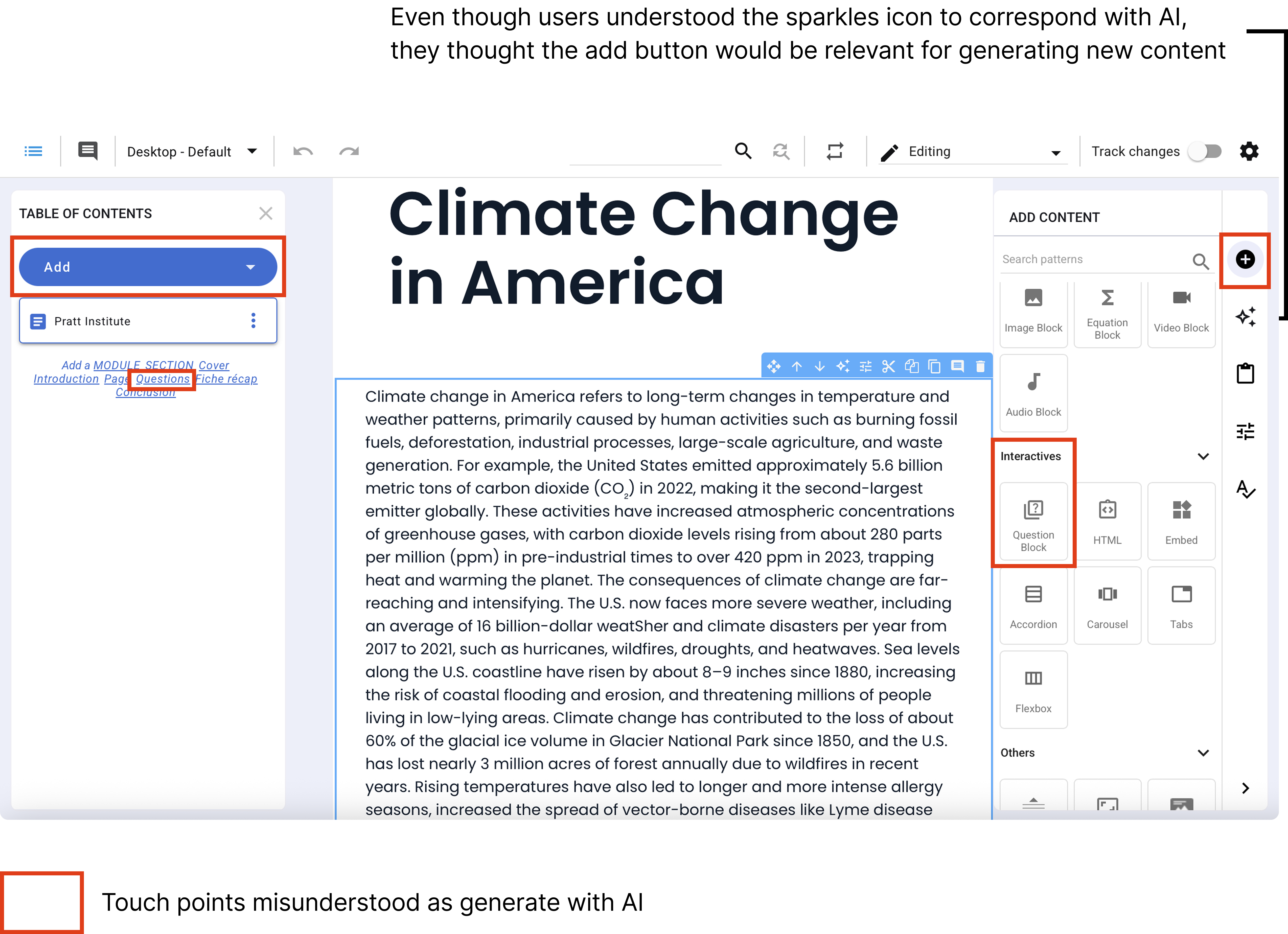
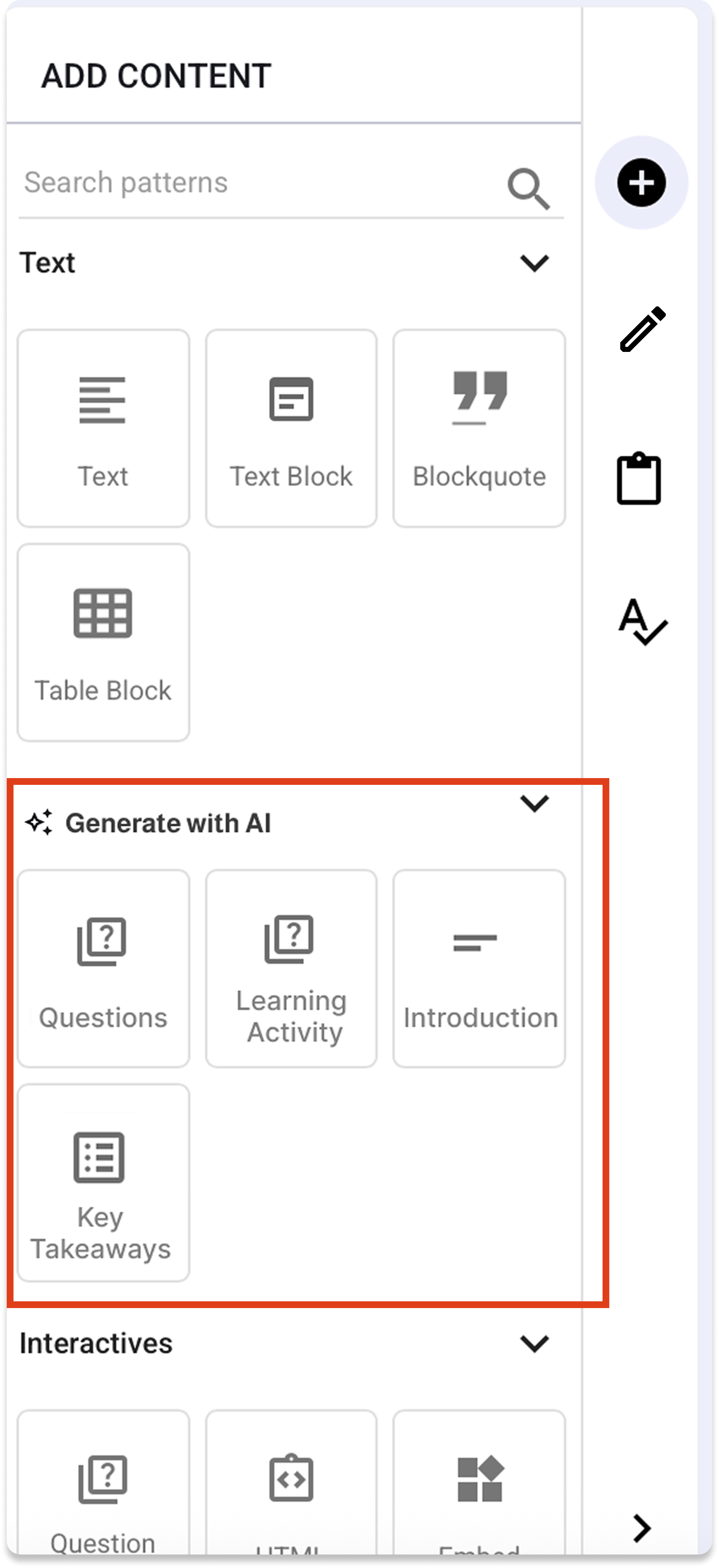
The "Generate with AI" CTA was hard to find: 6/8 participants mistook other touchpoints (like "Add Questions" or the "+" menu) for AI entry points.
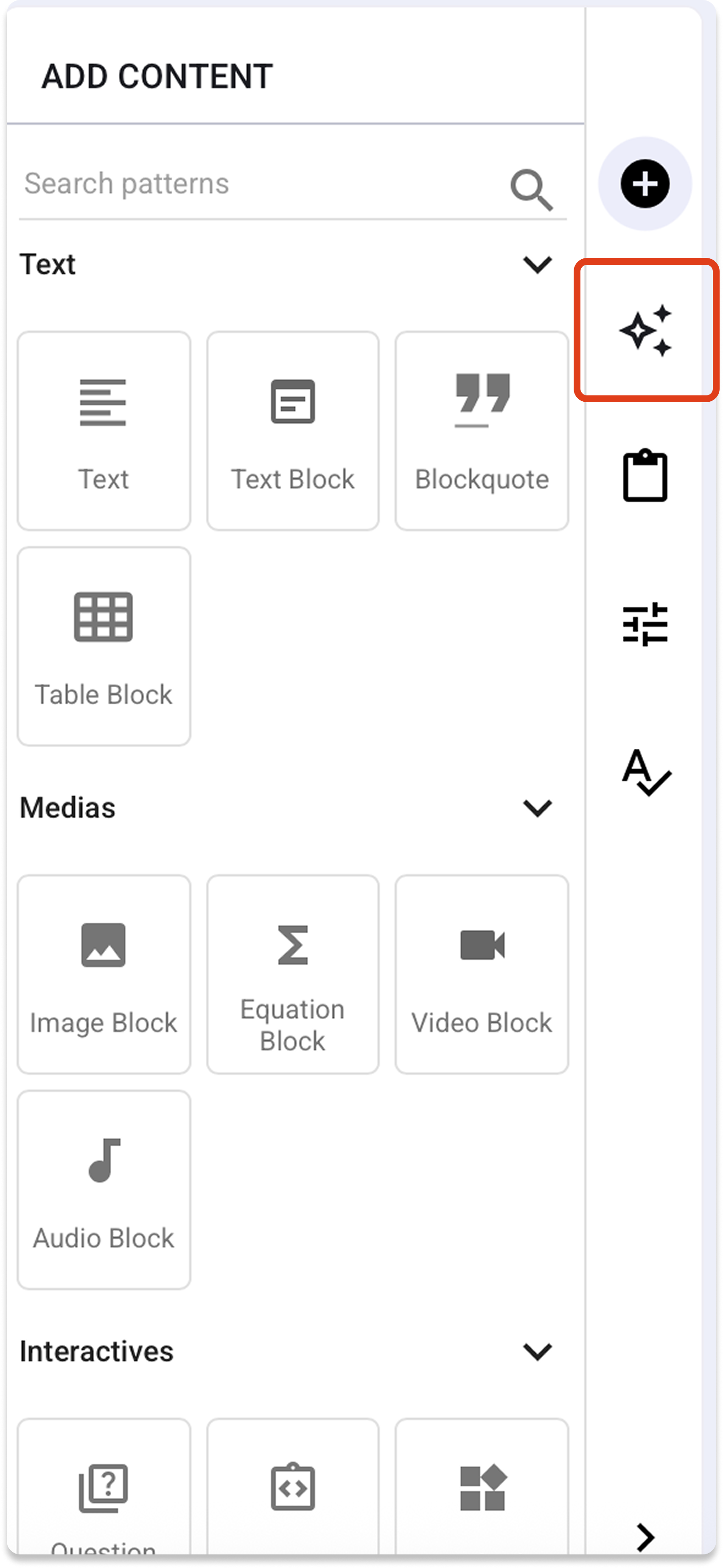
Move AI generation into the "+" panel and update the edit icon to a pencil to match user expectations.
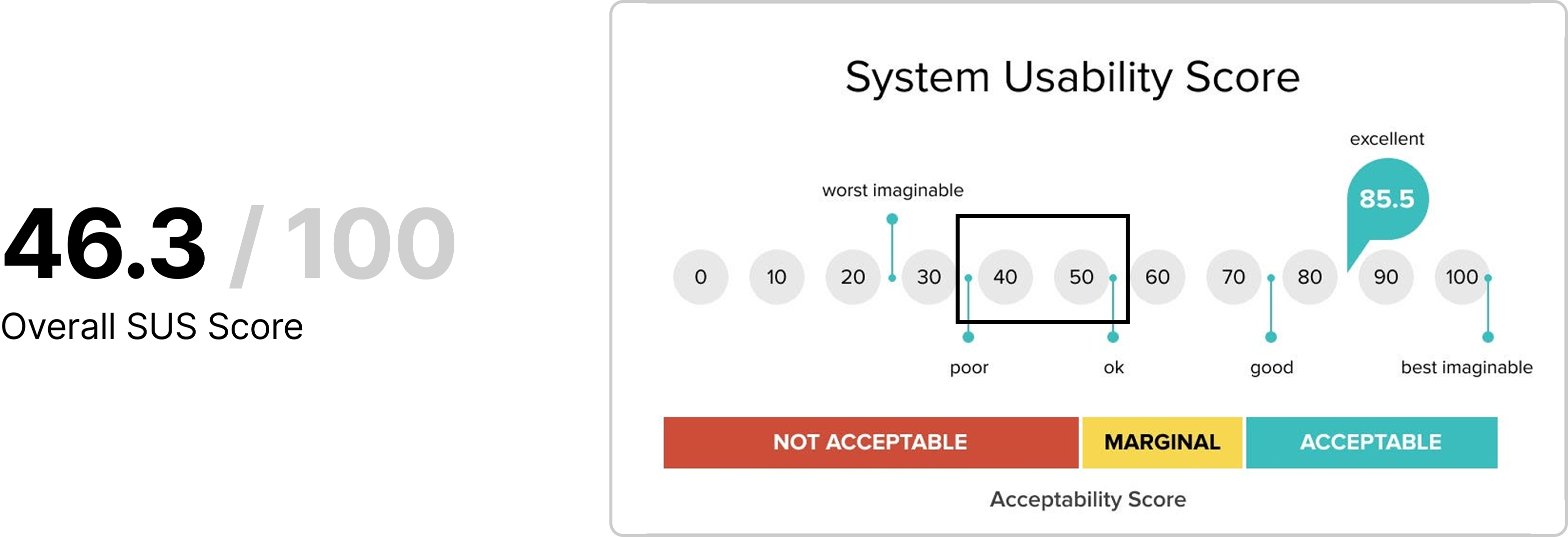
The mixed-methods research protocol was designed because no single method would have been enough. Eye-tracking captures where attention goes, not why. Retrospective think-aloud surfaces intent without altering behavior. The SUS score gave us a quantitative baseline to anchor it all. Together, they made the findings credible.
Every recommendation we made was adopted. All three, into the next sprint.
- Mixed-methods research protocol combining eye-tracking, retrospective think-aloud, and SUS scoring
- Gaze path analysis and heatmap documentation across 3 core task flows
- 3 prioritized design recommendations: all 3 adopted into the next product sprint
- Executive summary presented to Gutenberg's product and engineering leadership
"This presentation was just mind-blowing." — Aurore, Gutenberg Technology